A Real Critique Beats a Mirror Every Time. Here’s How to Get One That Matters.
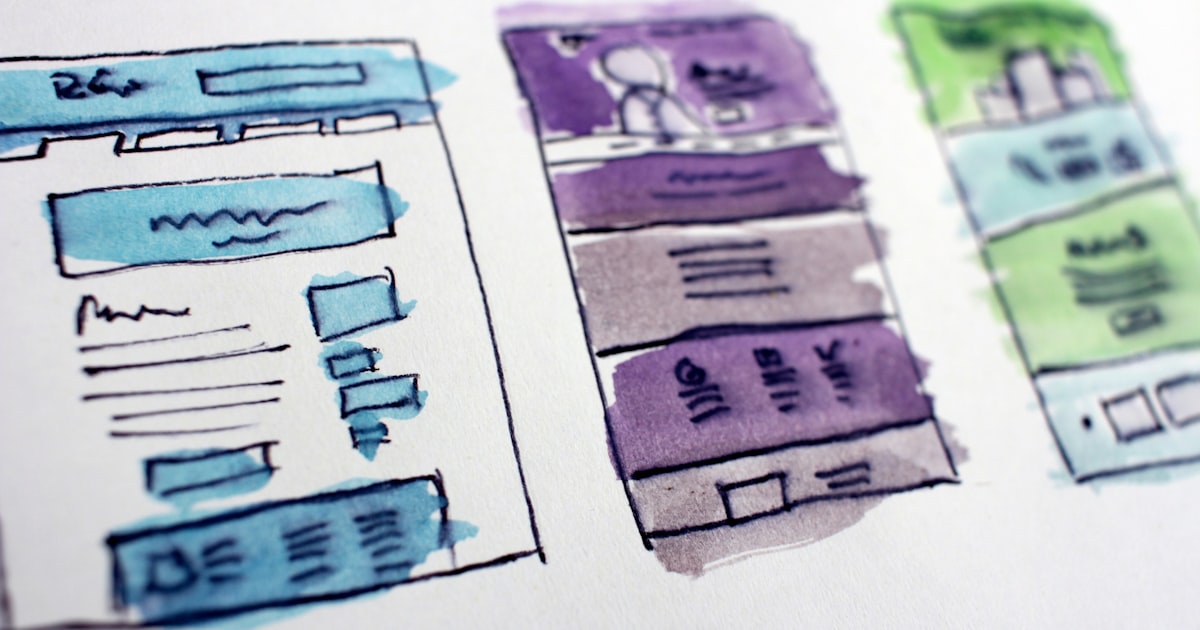
Every designer reaches the same wall: you’ve polished your portfolio, reordered your cases, rewritten your about page — and then you stare at it and realize you can’t tell if it’s actually good. You’re too close to the work. That’s exactly why a design portfolio critique matters. It’s the difference between guessing what a hiring manager sees and knowing.
But not all critiques are created equal. Most advice is vague (“make it cleaner!”) and most reviewers are people who will spare your feelings for the sake of politeness. This guide covers what reviewers actually look for, the blind spots that almost every designer misses, and how to interpret the feedback you get so it turns into real improvement — not just a to-do list you ignore.
Why a Portfolio Critique Is the Highest-Leverage Feedback You Can Get
A portfolio is not a gallery and it is not a diary. It’s a sales document whose job is to make a stranger decide, in under a minute, that you’re worth interviewing. When you critique your own work, you evaluate it as the person who made it — you fill in the gaps of the story automatically, because you already know the story. A reviewer doesn’t. They see exactly what’s on the page, in the order it loads, with all the missing context and unclear navigation that you’ve stopped noticing. That external view is the entire value of a critique.
The best time to get one is early — before you send applications, before you go freelance, before a client asks to see your work. The second-best time is now.
What Reviewers Actually Look For
Too many designers frame their portfolio as a visual showcase and assume the reviewer is judging aesthetics. They are — briefly. But the people who hire and buy design are evaluating something more specific. Here’s what a serious reviewer — a recruiter, a design lead, a client — is silently checking as they move through your site.
1. Can You Explain the Problem You Solved, Not Just the Screen You Designed?
A case study that says “I redesigned the checkout flow and here are the screens” tells a reviewer almost nothing about your ability. What they’re looking for is a before-and-after logic: what was broken, who was affected, what you changed, how you measured the result. The design is easy to see; the thinking is what proves you’re a hireable designer rather than someone who prettifies interfaces.
2. Is Every Piece Earned, or Is It Just Pretty?
Reviewers scan for relevance and curation, not volume. A portfolio with twelve similar logo projects says “I did my logo class” and nothing else. A portfolio with four deep, clearly-separated projects — each with a different problem and outcome — says you can operate across contexts. The critique question here is brutal but fair: could any of these projects be cut without losing the story you’re telling? If the answer is “yes,” that project is just decoration.
3. What’s the Actual Outcome?
Numbers and named results are rare in design portfolios, which is exactly why they stand out. A reviewer’s eyes linger on “increased signup conversion by 18%” or “client retained us for 3 more projects”. If you frame every case study around the problem and the measurable result, you move from “portfolio” to “proof.”
4. Does the Case Study Respect the Reader’s Time?
Long, rambling case studies get skimmed and abandoned. The structure matters: a one-line summary up top, the problem, your process, the outcome, and the visuals to support each point. If a reviewer can summarize your project in one sentence after reading it, you’ve nailed the structure.
The Blind Spots Most Designers Miss
Here’s the uncomfortable part: there are problems in your portfolio you probably won’t find on your own, no matter how many times you reread it. These are the blind spots that show up in almost every review session.
The Invisible Onboarding
You know your site’s navigation because you built it. First-time visitors often can’t find your work, don’t know if you’re available, and can’t tell whether you specialize or take anything. A reviewer on a phone, in a hurry, is the real test of your layout — not you on a desktop with full context.
The Over-Tuning That Reads as Insecurity
When a designer has several versions of almost the same project, or a homepage that restates the mission five times, it reads as not knowing what to cut. Confidence in a portfolio looks like fewer, better, clearer things — and reviewers judge that discipline as much as the work itself.
The Missing Audience
Portfolios that try to be everything to everyone — recruiter, startup client, corporate brand, and side-hustle app all at once — end up being persuasive to no one. The strongest portfolios are built for one specific reader, and the critique that catches this is worth more than any visual polish.
The Follow-Through Gap
Designers love presenting process: sketches, moodboards, iterations. But if the process section never lands on a clear outcome, the reviewer is left asking “so what happened?” Showing iteration is good; showing that iteration led to results is what converts a viewer into a believer.
How to Ask for a Critique That Isn’t Polite Nonsense
The single biggest reason critiques fail is the question you ask. “What do you think?” invites a vague compliment. The fix is to ask surgical questions that force the reviewer to look at something specific. Replace generic requests with prompts like:
- “After 30 seconds on my homepage, what do you think I do?” — this surfaces onboarding and positioning problems instantly.
- “Which case study would you want to read second, and why?” — this tests curation and narrative order, not aesthetics.
- “Where did you get bored or confused?” — frequently-used feedback is rarely about taste, so this one is safe to ask of almost anyone.
- “Would you hire me for [role] based on this? If not, what’s missing?” — this forces the reviewer past “nice work” into the decision they’d actually make.
Ask the same questions of every reviewer you talk to. That consistency is what turns scattered opinions into comparable data you can act on.
Who Should Critique Your Portfolio?
Different reviewers see different things, and a good critique strategy gets you more than one perspective. Here’s who to look for and why their angle matters.
Working designers will catch craft-level issues: hierarchy, spacing, type choices, visual inconsistency. They judge you as a maker.
Recruiters and hiring managers evaluate whether your portfolio proves you can do the job right now. They don’t care about your design taste as much as whether your case studies add up to a hireable skill set.
Clients or non-designers simulate your real buyers. Their feedback reveals clarity problems that a designer’s eye skips — they experience the confusion your actual audience will feel.
The tension is obvious: getting all three of these takes months of networking, favors, and luck. That’s why many designers sit on an unfinished portfolio for a year waiting for the “right” reviewer. If that sounds like you, an instant critique beats another month of waiting.
How to Interpret Feedback Without Breaking Your Portfolio
Once you have opinions, the hard part is knowing which to act on. A few rules keep you from thrashing.
Group feedback into themes, not voices. One person says “too much text,” another says “explain more.” Those aren’t opposite instructions — they’re both saying the writing isn’t structured. When three different people surface the same underlying problem, fix it. Single mentions are worth a second look, not a rewrite.
Weight the reviewer by the job they’d do. A hiring manager’s confusion about your positioning outweighs a friend’s certainty that your colors are nice. Score the feedback by who said it, not how diplomatically it landed.
Read the question behind the comment. “Do you take freelance?” means your availability is buried or unclear. “Is this a real project?” means your case studies aren’t grounded enough to feel credible. Almost every vague comment maps to a concrete fix if you look for it.
Fix the structural issues before the visual ones. Reordering your case studies or rewriting a weak problem statement moves the needle more than nudging spacing. Paint the room before you rearrange the furniture.
Getting a Critique Without Waiting on a Mentor or a Paycheck
The traditional paths to a portfolio critique are slow and unreliable. Mentors have full calendars. Friends are too polite. Paid coaching sessions cost hundreds of dollars and still only give you one person’s perspective, filtered through their own taste.
That’s exactly the gap an instant, multi-persona critique fills. Instead of begging for one opinion, you can run your portfolio through several simulated reviewers at once — a recruiter, a fellow designer, and a client — and get each of their perspectives in about 15 seconds. No scheduling, no small talk, no soft-pedaling.
That multi-persona view is the piece most designers never get. A designer’s critique catches craft problems. A recruiter’s critique catches whether you come across as hireable. A client’s critique catches whether your work feels like it would solve their problem. Getting all three at once — instead of whichever elder is willing to meet for coffee — is the difference between polishing your portfolio and actually improving it.
If you want that instant read right now, Roast My Portfolio runs your work through those simulated perspectives and tells you what’s hurting you, what’s working, and what a hiring decision-maker would conclude. It costs nothing and it doesn’t require waiting on anyone’s calendar.
The Routine That Turns Critiques Into Progress
A critique is only useful if you act on it. Here’s the loop that actually moves the needle.
- Run a baseline critique of your current portfolio and note the top three issues across all reviewers.
- Fix the highest-leverage issue first — usually positioning or case study structure, not visual polish.
- Re-run the critique to see what changed. Repeat until the feedback stops surfacing real problems.
- Keep the habit. A portfolio is never finished, and neither is the feedback loop that keeps it sharp.
Your portfolio will always be a moving target. But with the right questions, the right reviewers, and a fast way to get honest feedback, you can stop guessing what people see — and start knowing.